
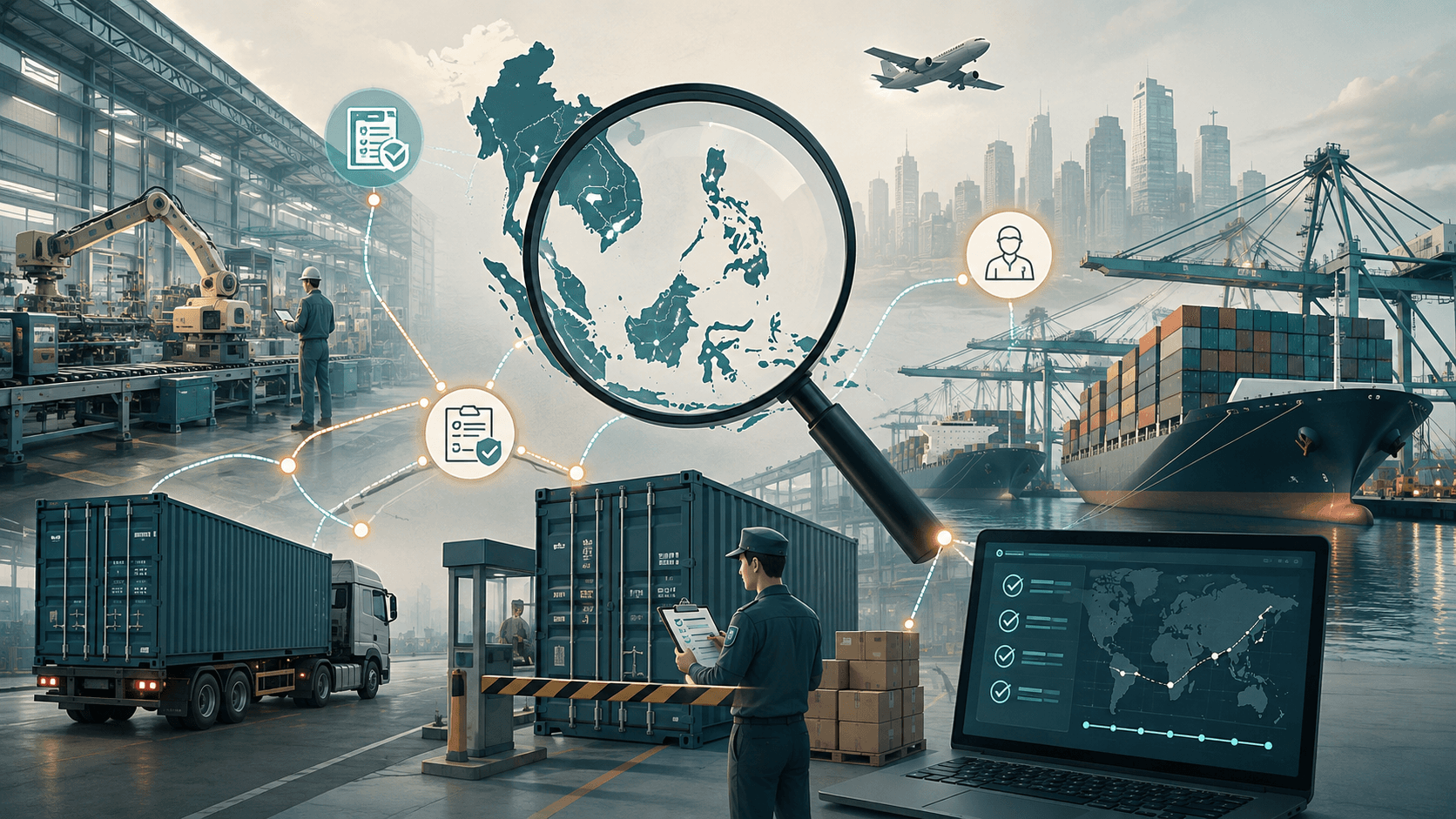
What TradeGen is highlighting
This Marketing News brief adapts TradeGen's analysis by Feitty Eucharisti. The central point is that rising ASEAN exports after US-China tariff tension may signal risk, but the legal question is whether production and origin support the declared country.
Why it matters
The analysis responds to a US narrative on transshipment risk and explains that tariffs can legitimately shift sourcing, investment, and final production into ASEAN.
It distinguishes trade reallocation from rerouting. Reallocation means economic activity moves; rerouting means the path changes; illegal transshipment requires evidence of origin misrepresentation.
The core compliance issue is proof. Companies need production records, input traceability, capacity evidence, and applicable origin-rule calculations before scrutiny arrives.
What businesses should do next
- Map input origins and transformation steps.
- Keep capacity and production evidence consistent with export volumes.
- Review US origin rules product by product.
Editorial note
This article is an original Marketing News adaptation based on TradeGen's source article, "The “Great Transshipment Scam”: Is ASEAN Really Rerouting China’s Trade—or Is Trade Simply Moving?", published on 17 August 2026. The source is attributed for facts and framing; this version is rewritten for GetRegNex readers.
Related articles
Related articles
Continue with articles selected from similar topics and tags.
Why ASEAN Became the Middle Ground in the US-China Trade War
TradeGen frames ASEAN as a strategic middle ground where supply-chain diversification, investment shifts, and compliance scrutiny now meet.
Read article
ASEAN Under Pressure: Which Sectors Feel EU-US Alignment First
TradeGen's sector-by-sector view shows that EU-US alignment affects industries unevenly, with exposure shaped by energy, standards, subsidies, origin, and supply-chain dependence.
Read article
The EU-US Trade Axis Is Really About Energy Security
TradeGen frames the EU-US deal as an energy-centered shift that can influence industrial costs, geopolitical alignment, and downstream competitiveness.
Read article